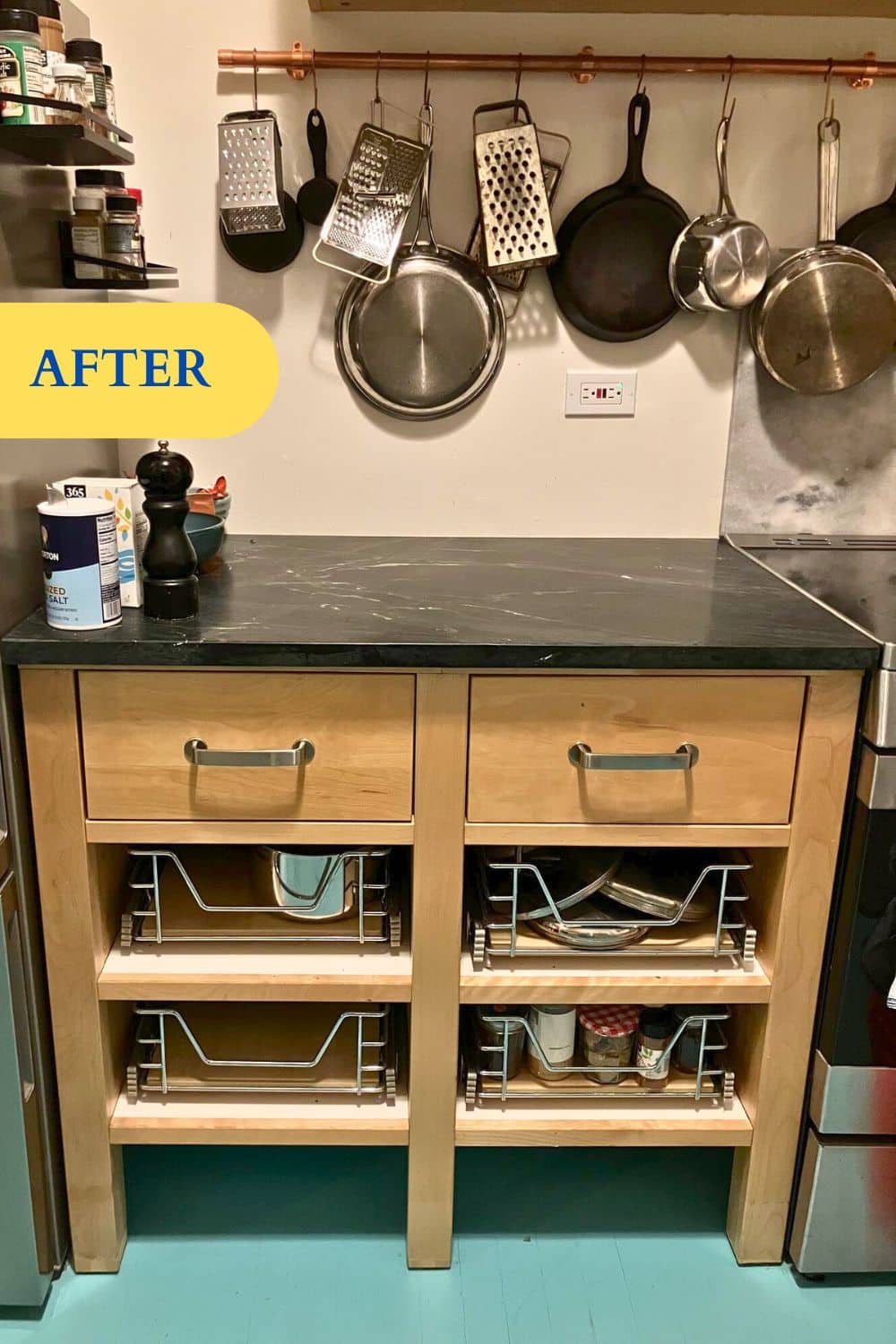
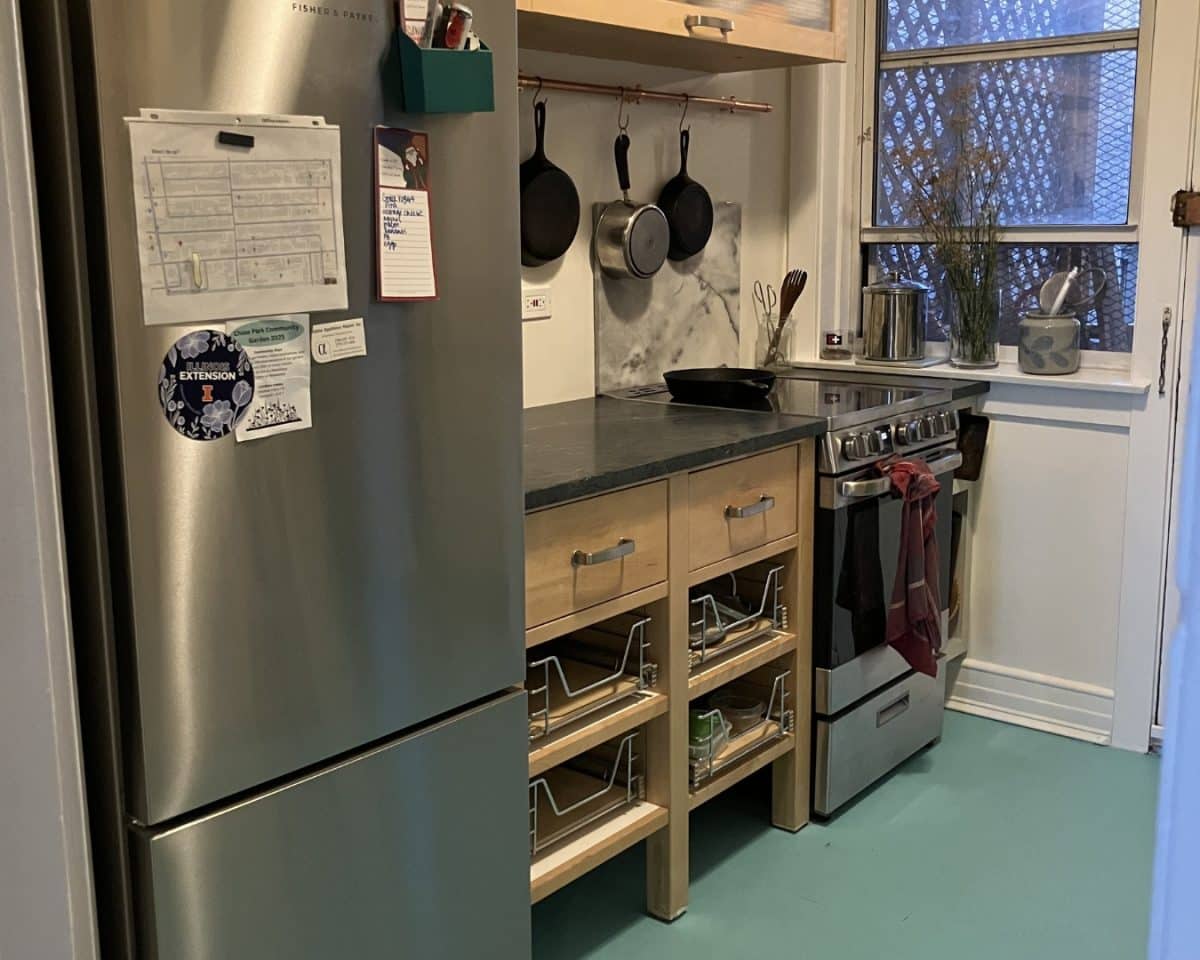
When Amy decided it was time for a kitchen redo, she wanted to keep her existing IKEA cabinets. She loved how they looked, and they were in great shape, so she figured, why not reuse them and save some money?
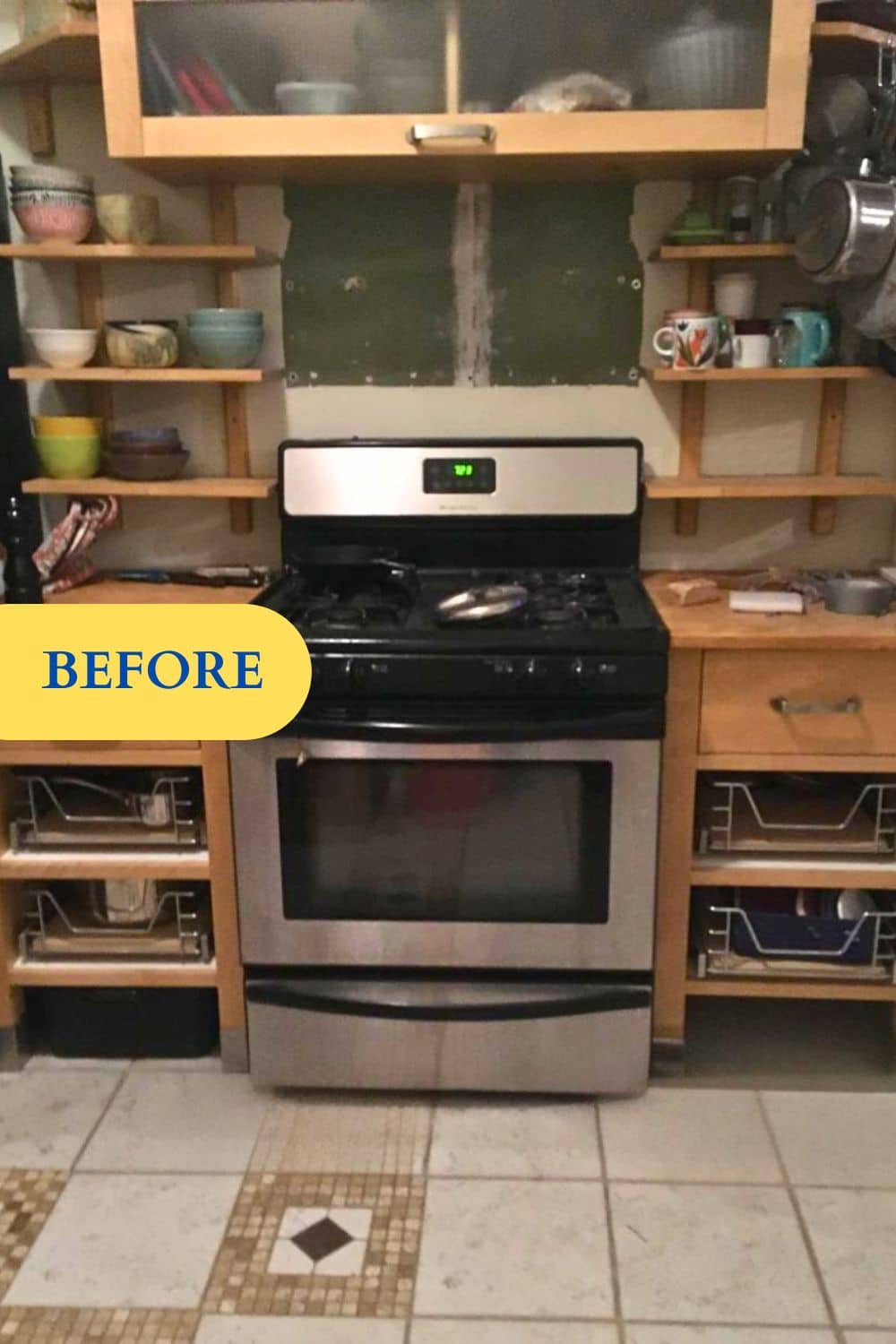
However, she needed a better layout to improve functionality in her small kitchen. Her existing setup featured two old VÄRDE cabinets flanking her stove. She decided to combine them into a single unit, which would give her more usable counterspace.
After a few trips to the hardware store and a long day of measuring, tweaking, and analyzing, she completed her new custom cabinet. The only things she needed to buy were the screws and shims (about $10).
Technically, she also bought a new countertop for her kitchen, but as she pointed out, “I would have put a countertop on any cabinet in that space, so I don’t count that cost.” But you should keep that in mind in case you’re planning to recreate this hack.
What You’ll Need
- 2 IKEA VÄRDE 20 ½” base cabinets
- Utility knife
- Pry bar
- Hand saw
- Shims
- Clamps
- Small nails or tacks
- Basics — drill, screw gun, screws, tape measure, pencil
Turning Two IKEA Cabinets Into One Unit
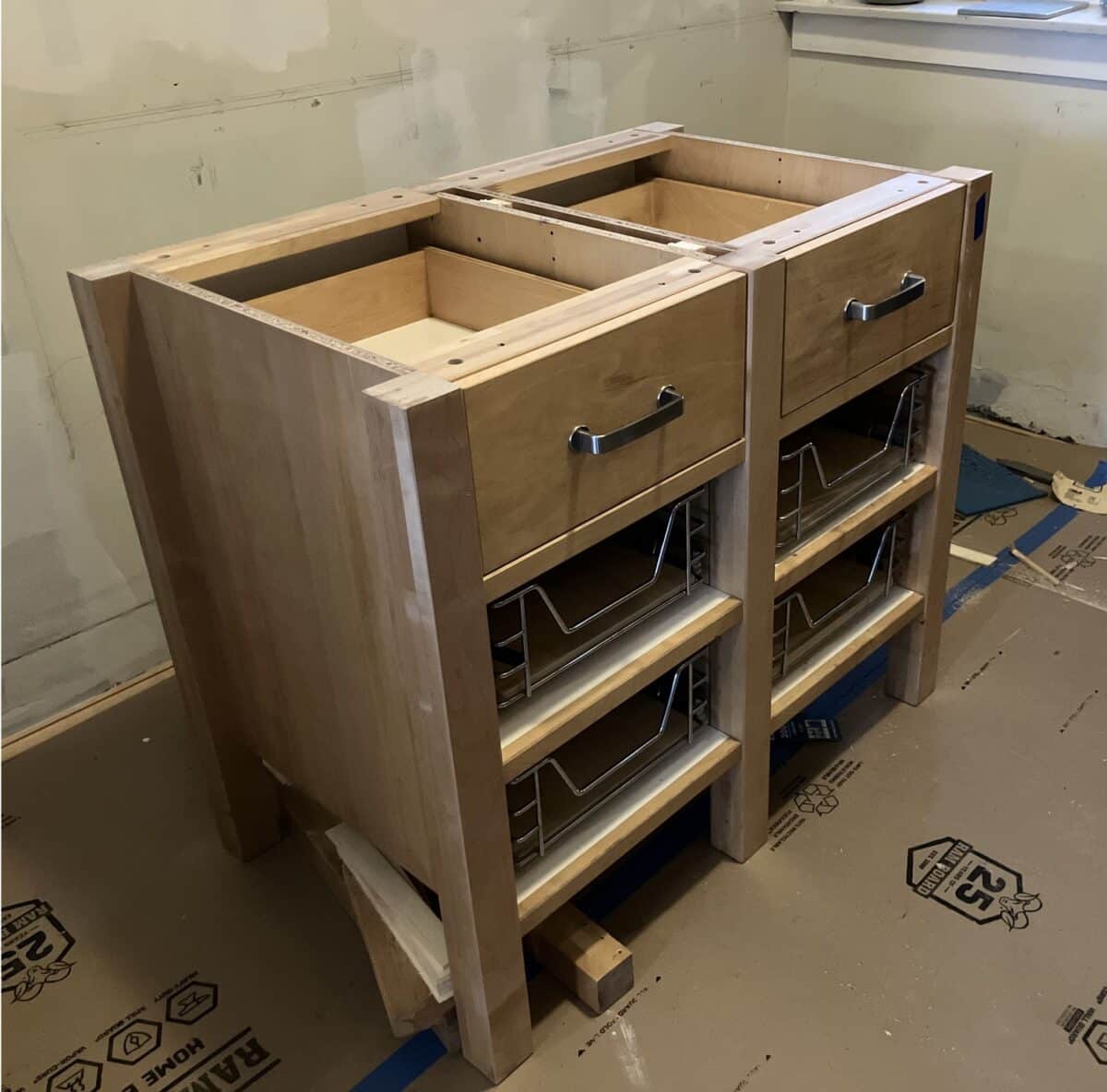
1. Assemble the IKEA Cabinets
You need to assemble one of the cabinets according to IKEA’s instructions. However, for the second cabinet, assemble all but one of the side panels. Keep the drawers out for now. (Note: IKEA has since discontinued its VÄRDE line, so an equivalent would be the SEKTION cabinets with MAXIMERA drawers and legs of your choice.)
If you’re working with two assembled VÄRDE pieces, as Amy did, then you’ll need to remove the side panel from one of the units. Save any pegs that you remove from the panel because you’ll need them later. Lay the cabinet on its side so you don’t stress the shelves.
2. Prepping the Side Panel
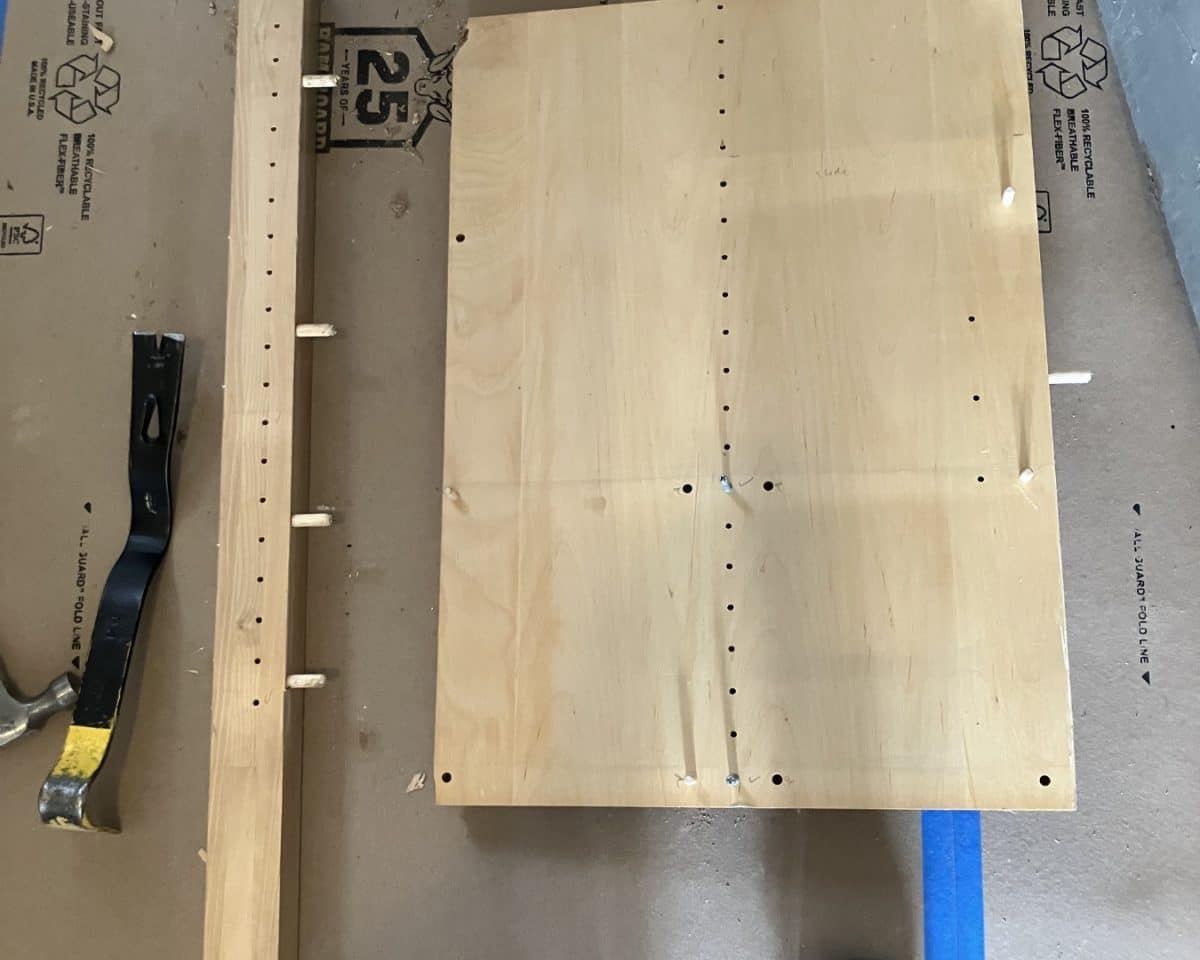
Since Amy disassembled existing cabinets, she needed to do a few extra steps. The VÄRDE side panel has the legs attached. She removed them carefully, using a utility knife to create a separation before sawing them off without causing any damage.
Amy suggests labeling the face of the panel to indicate which side is up, so it’s easier to reattach to the cross pieces and shelves later. Line up one of the removed legs with the leg on cabinet one to mark where the center of the holes should be for the cam locks on the cross pieces. (These are the pieces that hold the drawer and shelves.)
You only need to mark all of the holes if you want the shelves to remain adjustable. Drill all the necessary holes to the appropriate depths of the cam locks.
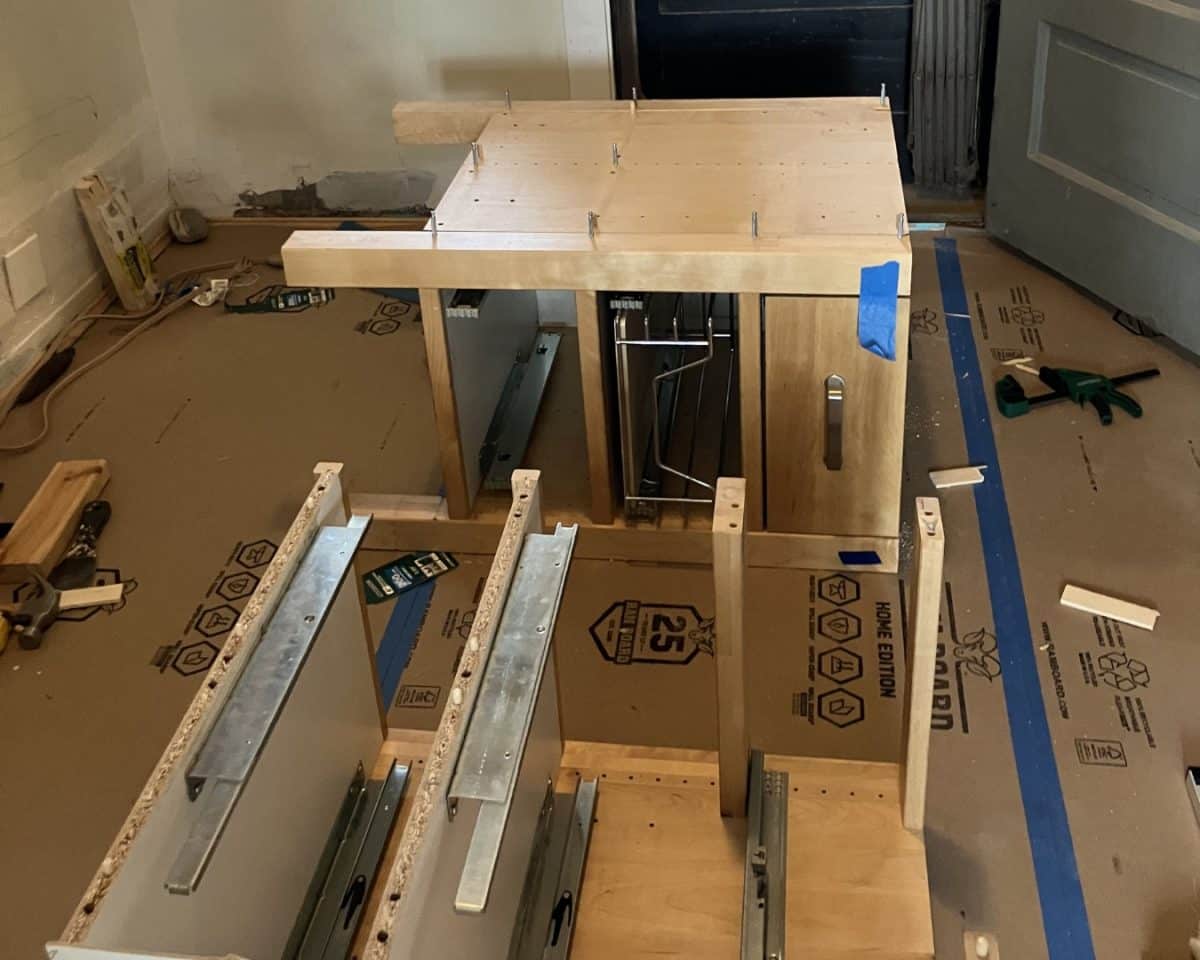
3. Reattach the Side Panel to Cabinet One
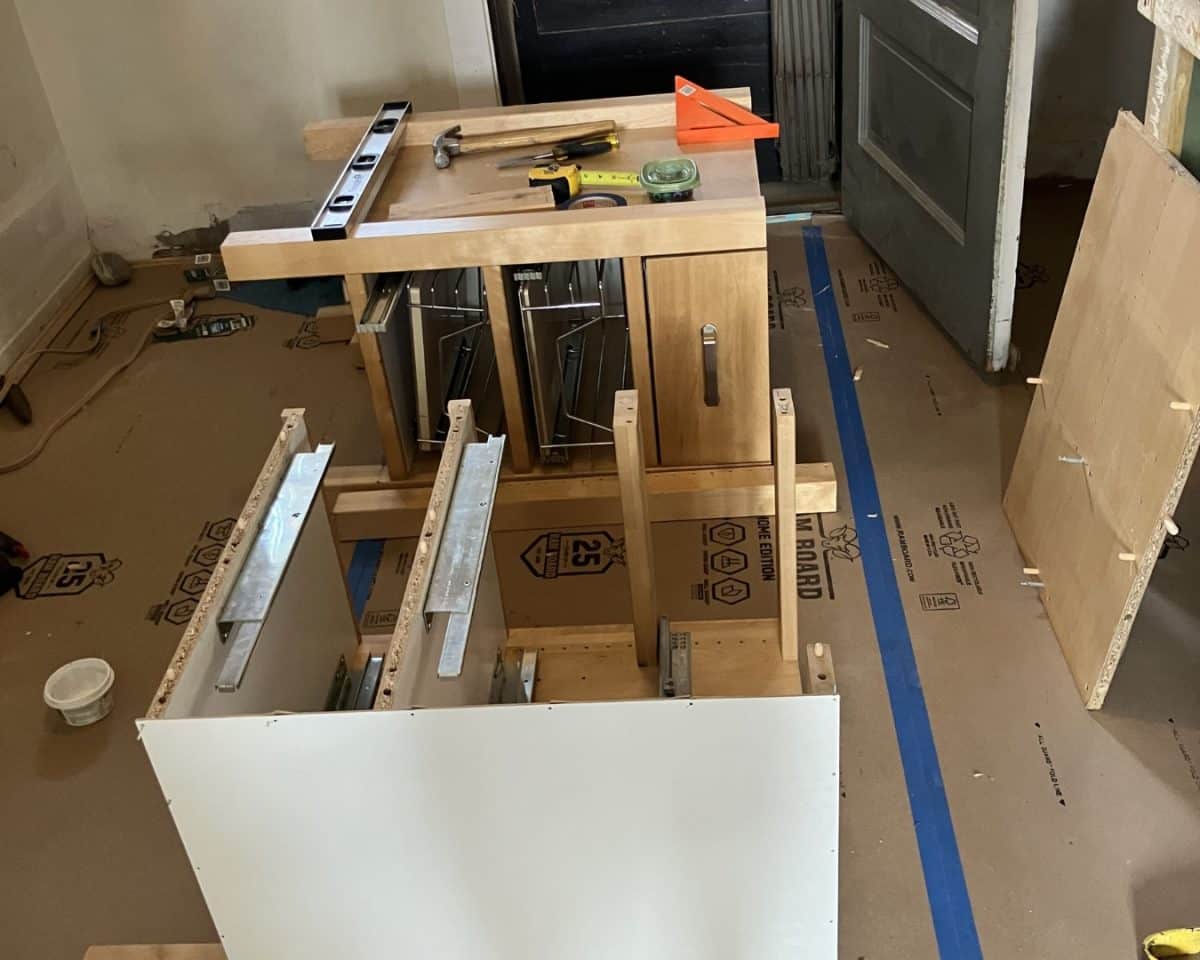
Once your holes are in place, attach the free side panel to the first cabinet, between the front and back legs on the left side. Lay cabinet one (the fully assembled unit) on its side, left side facing up.
Amy mentions needing a lot of shims for this step. She used four stacks — two on the upper part of the side panel and two on the lower, about 3 to 4 inches from the legs.
The screws for reattaching the side panel need to be long enough to go through both panels and the shims (without coming out the other side of the panel). Amy used 2 ¼” screws.
Make sure the face of the panel and the legs are flush, then clamp the shims to the top and bottom. Pre-drill screw holes, then screw through the solo side panel and the shims into cabinet one, using two screws per shim stack.
Notch the back of the rear leg on cabinet one to accommodate the melamine panel on cabinet two (the cabinet that’s missing its side panel). Measure and mark the length, width, and depth of the overhang of the melamine.
Stand the cabinet upright and screw one through the shims from the left side panel into the solo panel. Amy recommends doing so in at least three places, making sure everything feels sturdy.
4. Add Cabinet Two
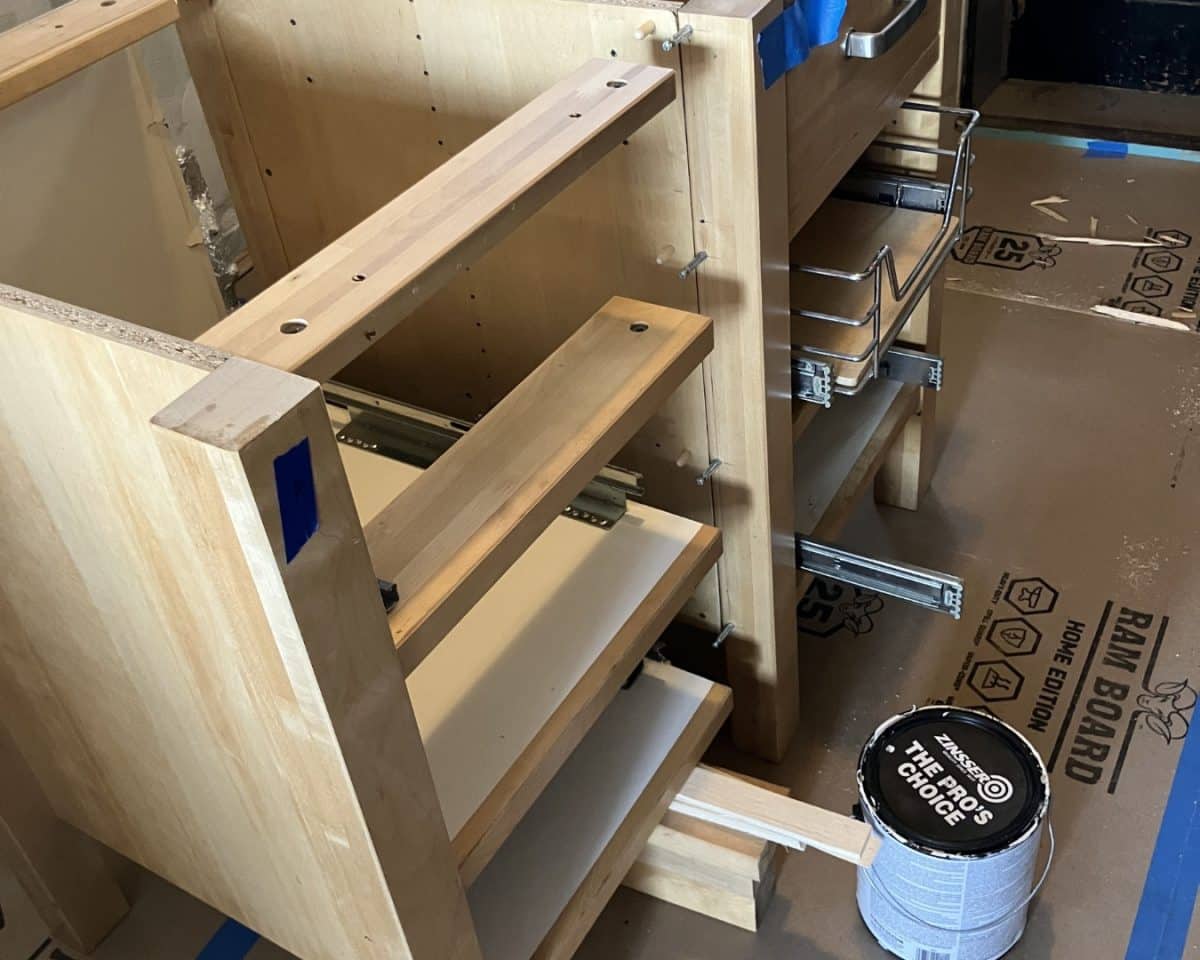
Stand up cabinet two, and prop up the shelves and crossbars so they line up with the appropriate holes on cabinet one. Screw the cam lock screws into the holes you drilled in the side of cabinet one and insert the pegs you set aside from earlier.
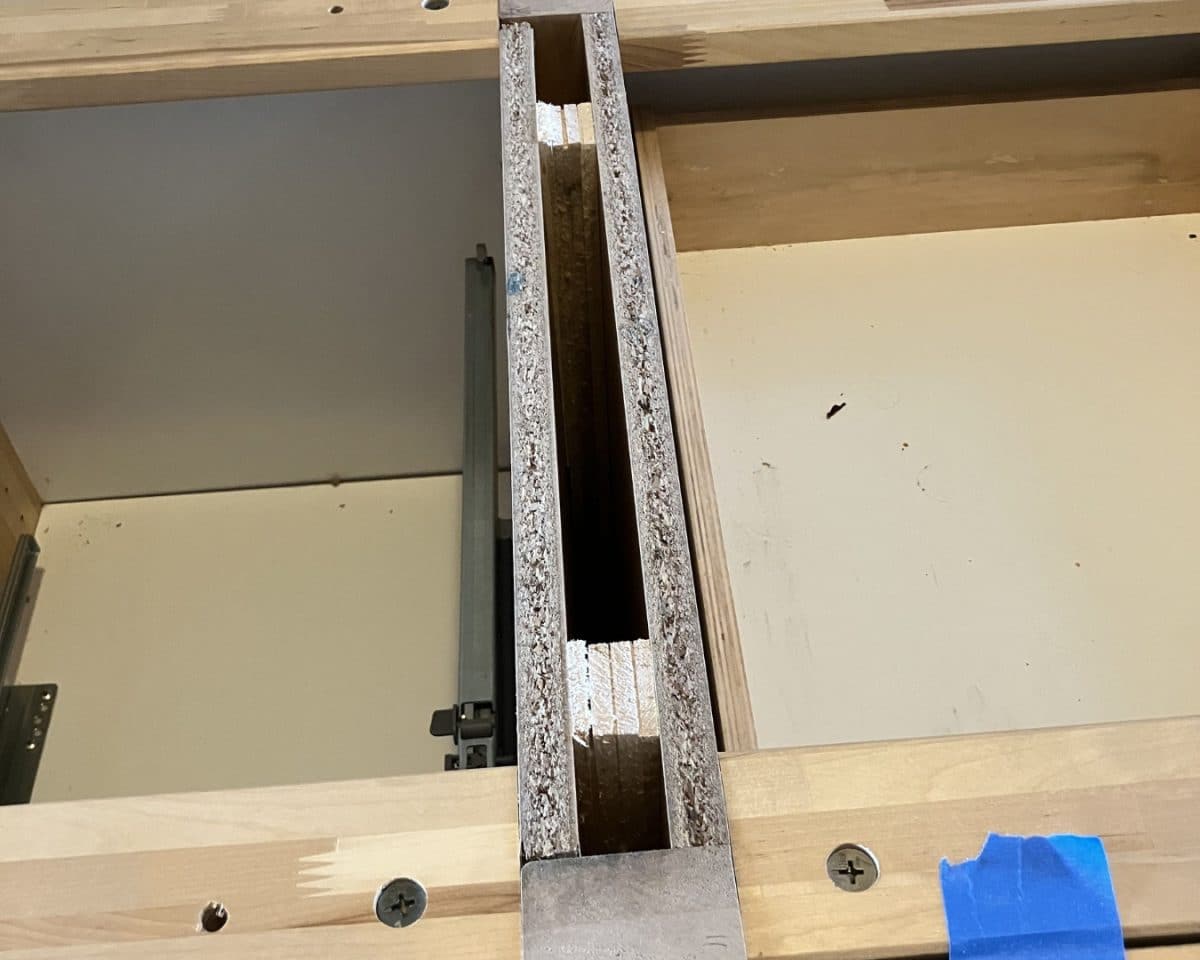
Once everything is in the right holes, finish attaching everything. Use small brad nails or tacks to attach the melamine to the back of cabinet two. Done!
Extra Steps For The IKEA VÄRDE Cabinets To Fit Her Kitchen
Amy saved the spare legs to use elsewhere in her kitchen redo (as any self-respecting hacker does). When you’re into DIY, you know that there’s always some future project you can use pieces in, so waste not, want not.
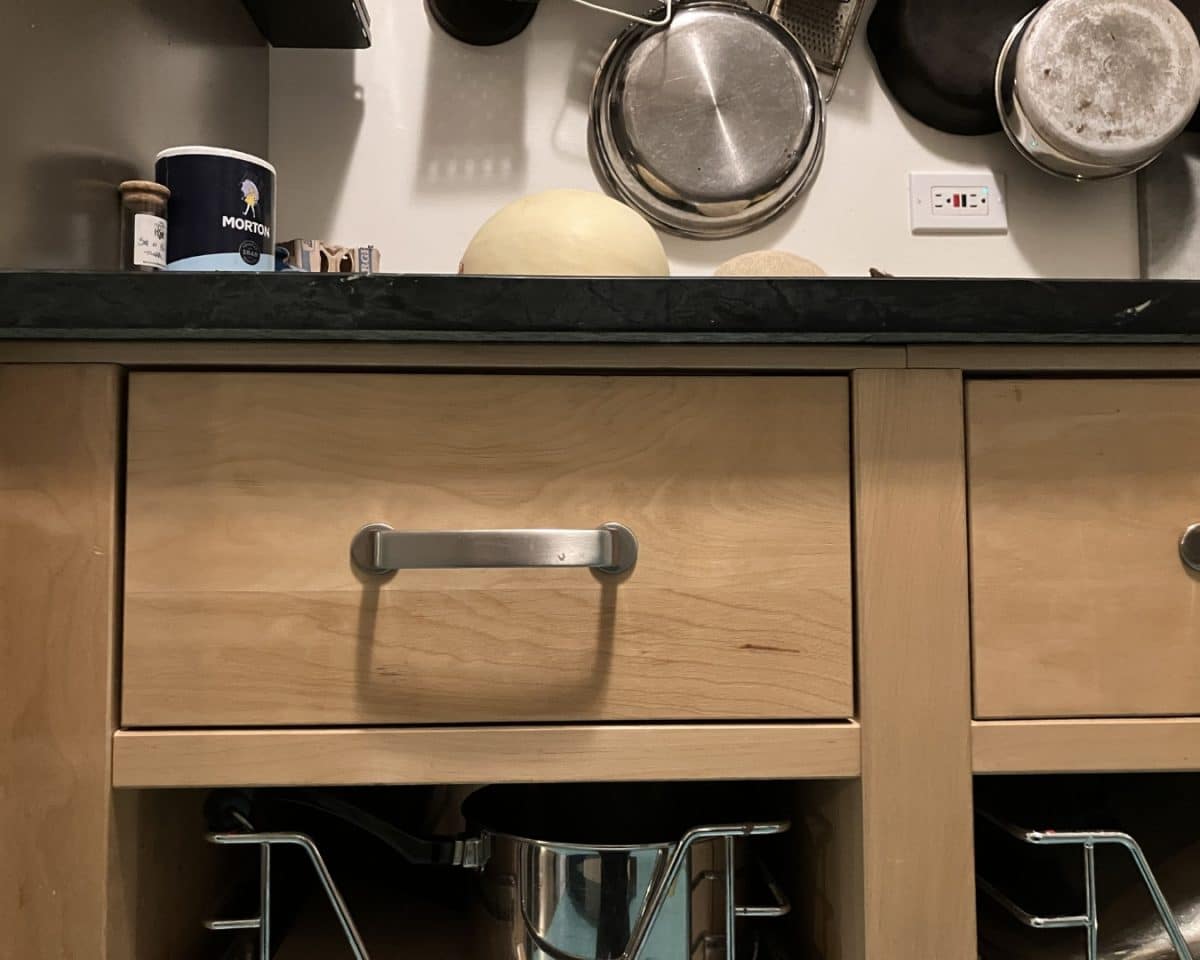
She also said the finished cabinet was a little low for her, so if you run into the same problem, here’s how she fixed it. She added plywood to the top and faced it with a strip cut from the front, above the drawers, before installing the countertop. She also raised the cabinet from the bottom, hiding foot extenders with pieces she cut from the spare legs so that everything would match.
What do you think? Would this be a hack you would try in your kitchen? It’s definitely a money-saver!