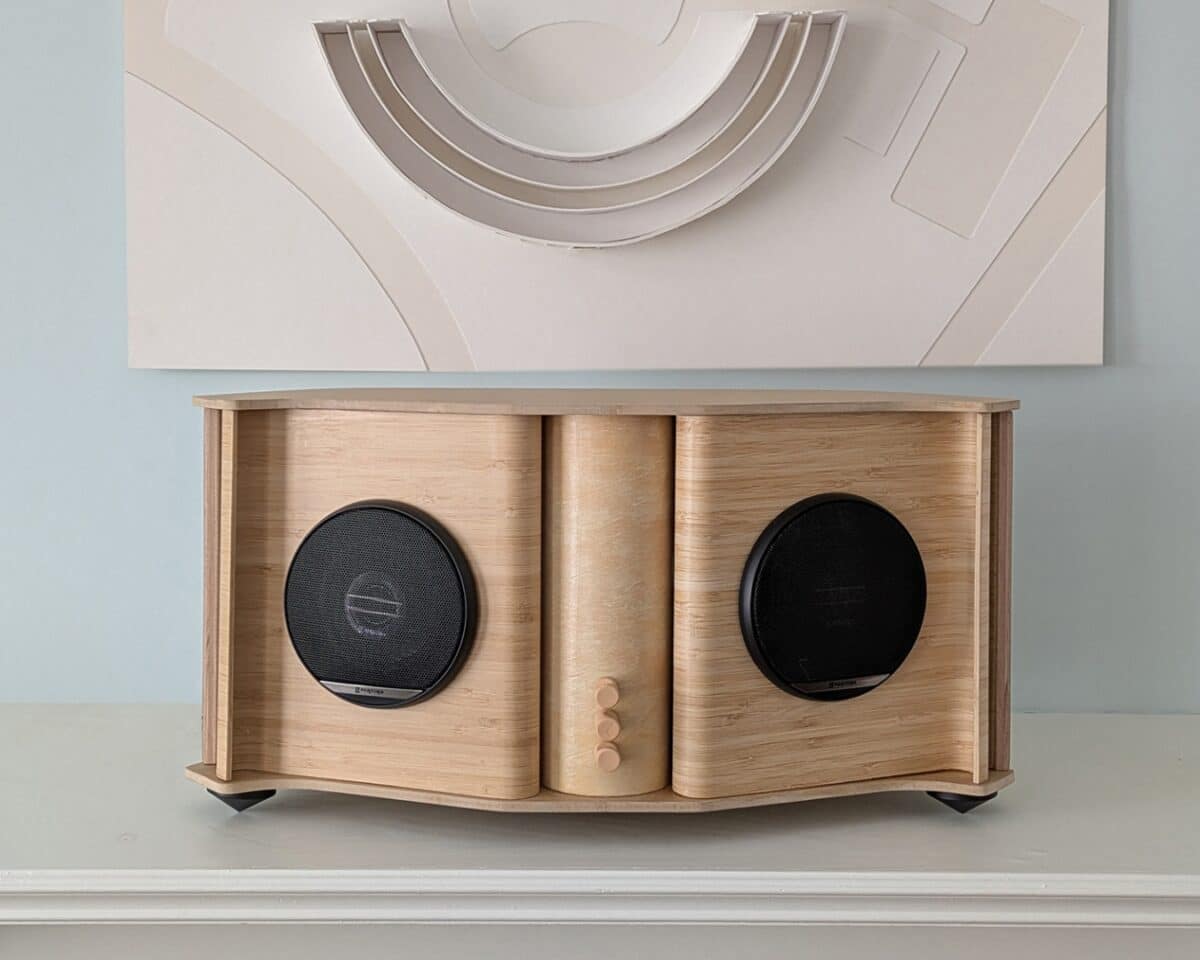
Most speakers are boxes. Rigid, sealed, acoustically inert boxes engineered to contain acoustic materials rather than become part of the sound.
David Kan, IKEA hacker and audiophile, explains, “The [speaker] drivers work solely on their own, without any musical interaction with the enclosure. The sound energy is fully loaded towards the front, masking musicality with high resolution. That makes these speakers oversensitive to room placement and tricky to position.”
But what if a speaker enclosure could work more like a piano soundboard? Thin, curved, resonant, interacting freely with the music passing through it?
That’s exactly the concept David, who has been building DIY speakers for over a decade, had when he looked at IKEA’s SIGFINN monitor stand and VIVALLA tablet stands and saw something no one else did: the raw bones of a sculptural speaker enclosure.
It’s the kind of lateral thinking that takes a certain kind of mind IKEA hackers identify with. So when David describes his “incurable obsession of looking at an object and visualizing it as a speaker,” we get it. That instinct to see past the label on the box, or in this case, the price tag on the flat-pack.
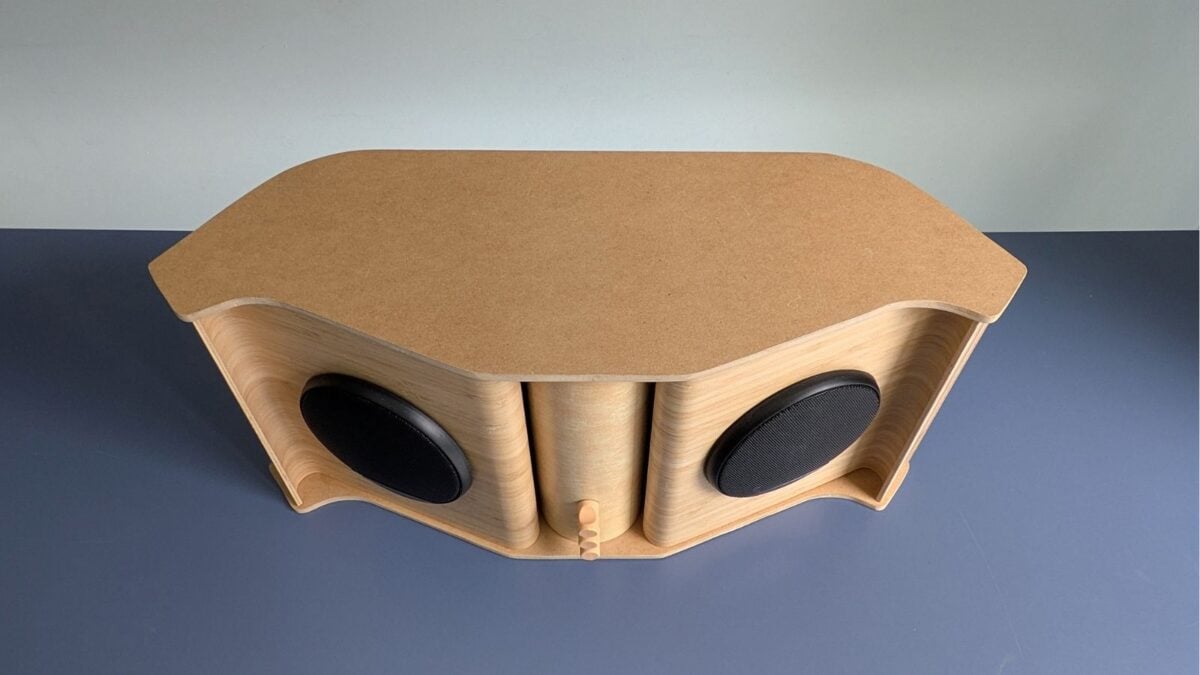
David poured his experience into building what he calls the Cremona Duetto — a one-piece stereo system that is as much musical instrument as it is speaker.
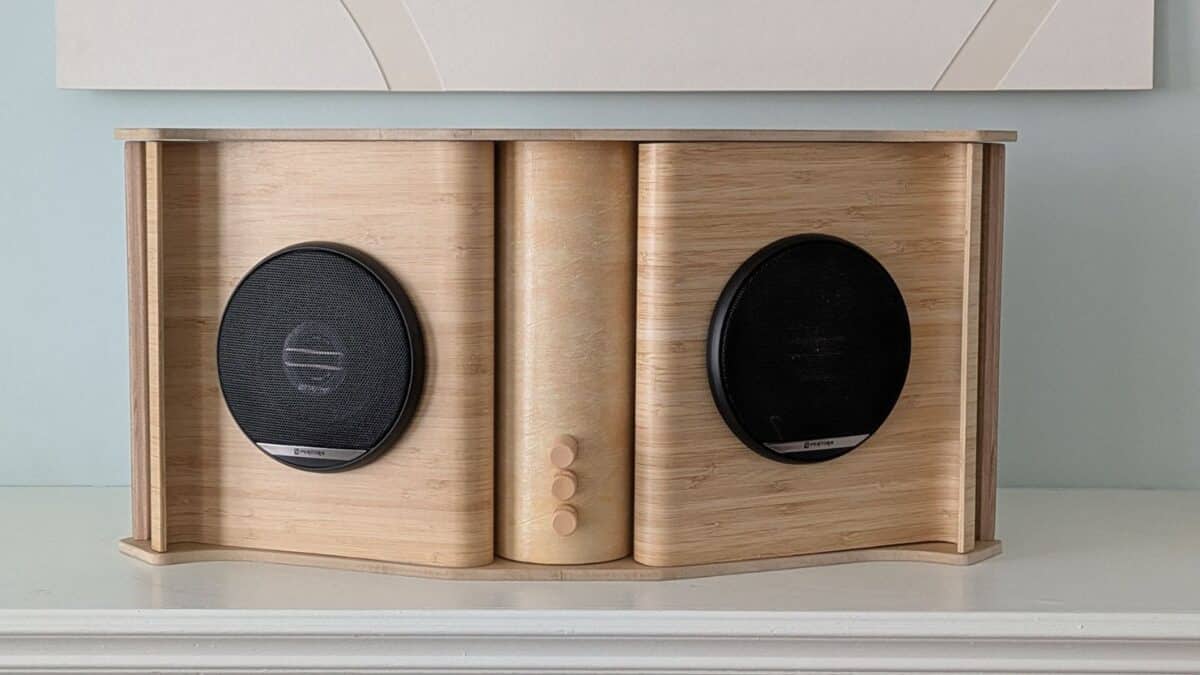
The enclosure is built from 6mm MDF and curved bamboo boards of 4mm and 8mm thickness, giving the system a distinctly organic, sculptural silhouette. But the curves aren’t just aesthetic. Like a piano’s soundboard, the thin, flexible surfaces allow the enclosure to breathe and resonate with the music’s pulse.
Pair that with a rear-ported design, a simple transmission line, and a manifold of opening vents, and you get something genuinely surprising: a Bluetooth speaker system housing a pair of 4″ coaxial 2-way drivers that sounds richer, wider, and more three-dimensional than its compact form suggests — and one that doesn’t care where in the room you put it.
Go ahead, hit play on David’s Cremona Duetto playlist. You’ll hear what we mean.
What You’ll Need
- 1 IKEA SIGFINN monitor stand
- 2 IKEA VIVALLA tablet stands
- 3 BILLY bookcase doorknobs
- 6mm thick MDF board
- 1 3”-diameter cardboard tube
- 2 Bamboo toothpick holders
- 4” coaxial 2-way car speakers
- Fosi Audio ZK1002T Bluetooth amp module
- 24V DC adaptor (power for the amp module)
- DC input extension cord/socket
- AUX line-in extension cord/socket
- Jigsaw
- Power sander
- Drill
- Hole cutter
- Hand saw
- Wood glue
- Paint
- Screws/screwdrivers
How to DIY Speakers from IKEA Monitor and Tablet Stands
1. Make a Plan
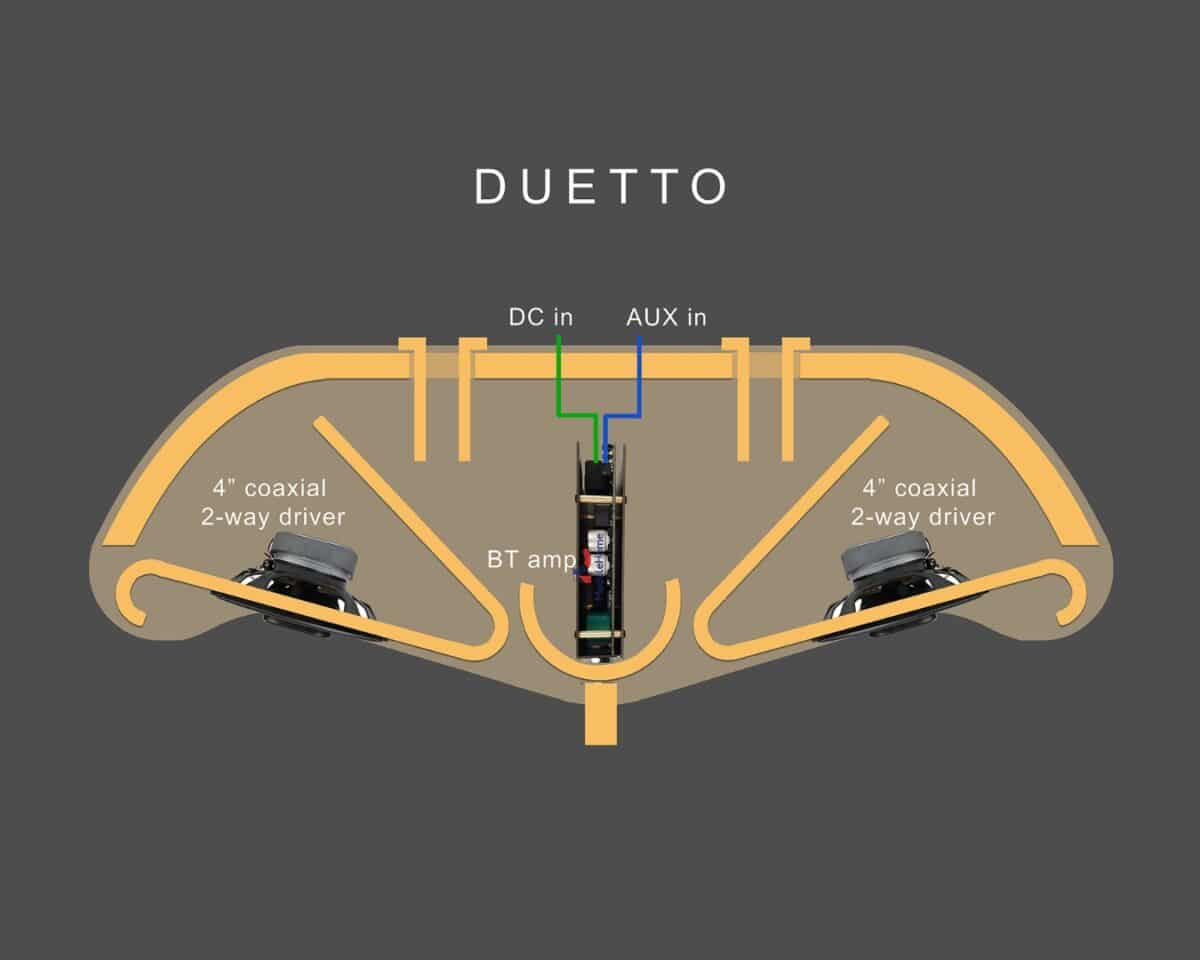
David recommends drafting your design for your speakers first. He used Photoshop, confirming the dimensions in the process. David notes that the “extended curved shape of the SIGFINN is perfect for the back and side panels.”
2. Prep the VIVALLA Stands
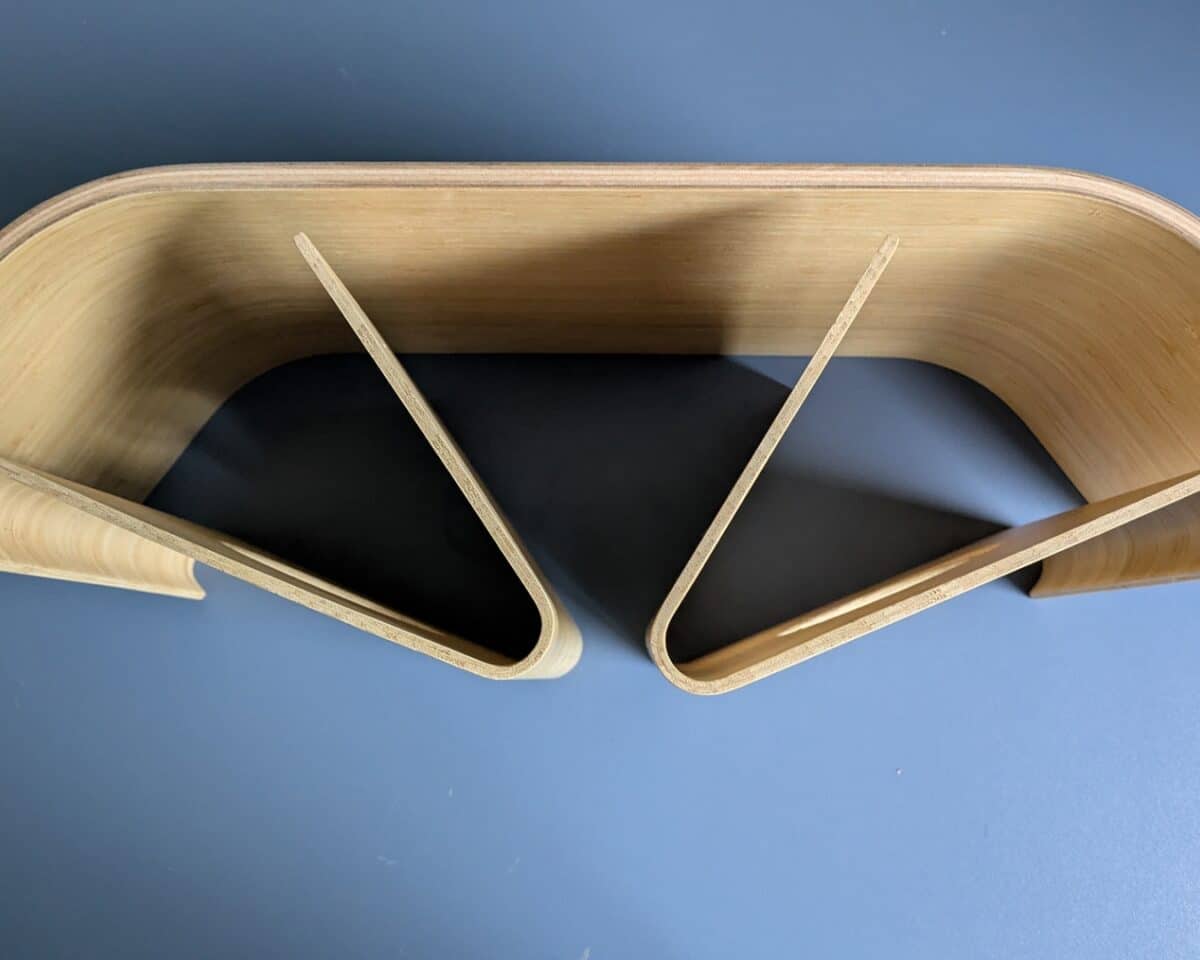
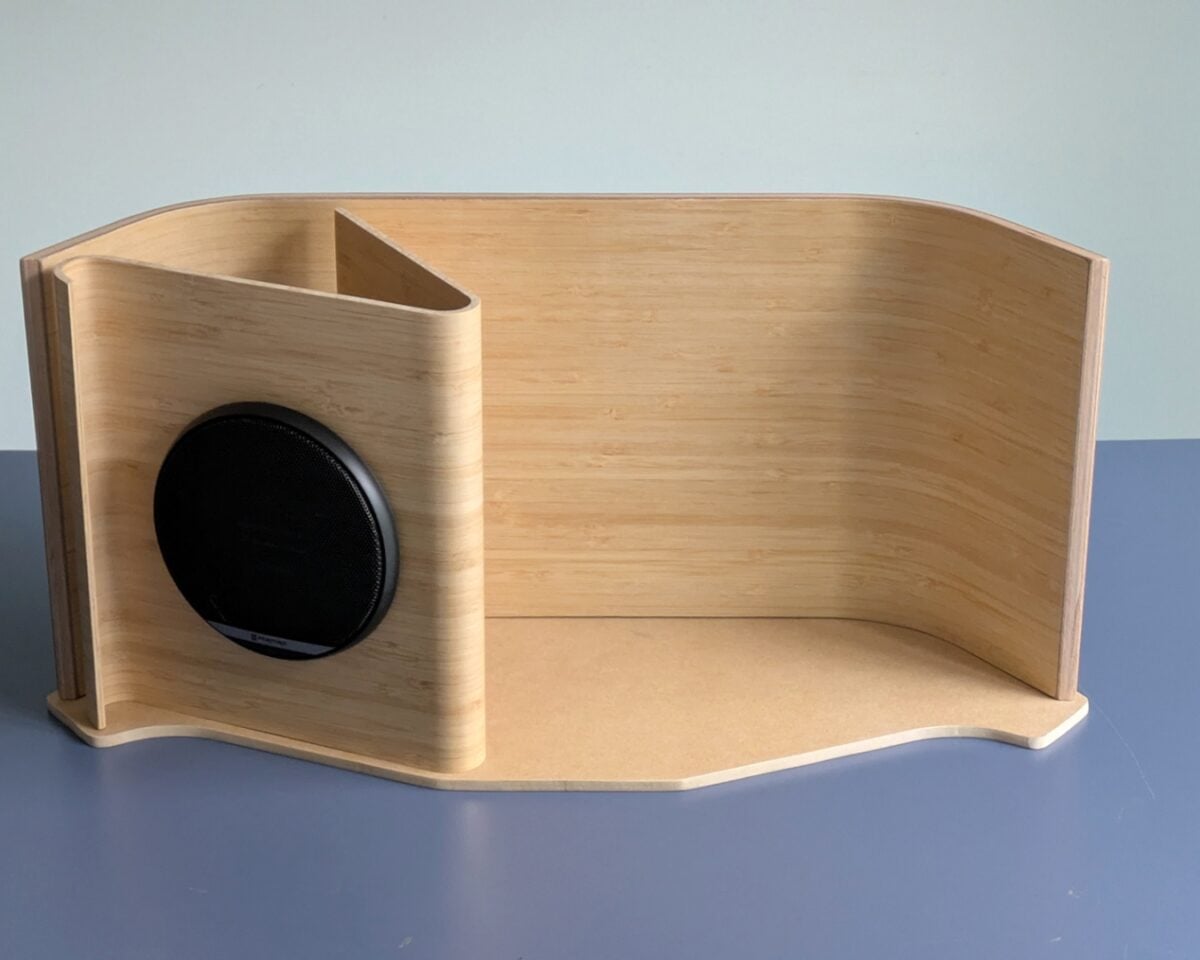
Two VIVALLA stands make perfect wings for this speaker, but you need to trim them down 2 cm to match the height of the SIGFINN. Cut two holes in the middle of the stands to install the 4-inch coaxial drivers.
3. Add the Tube and Knobs
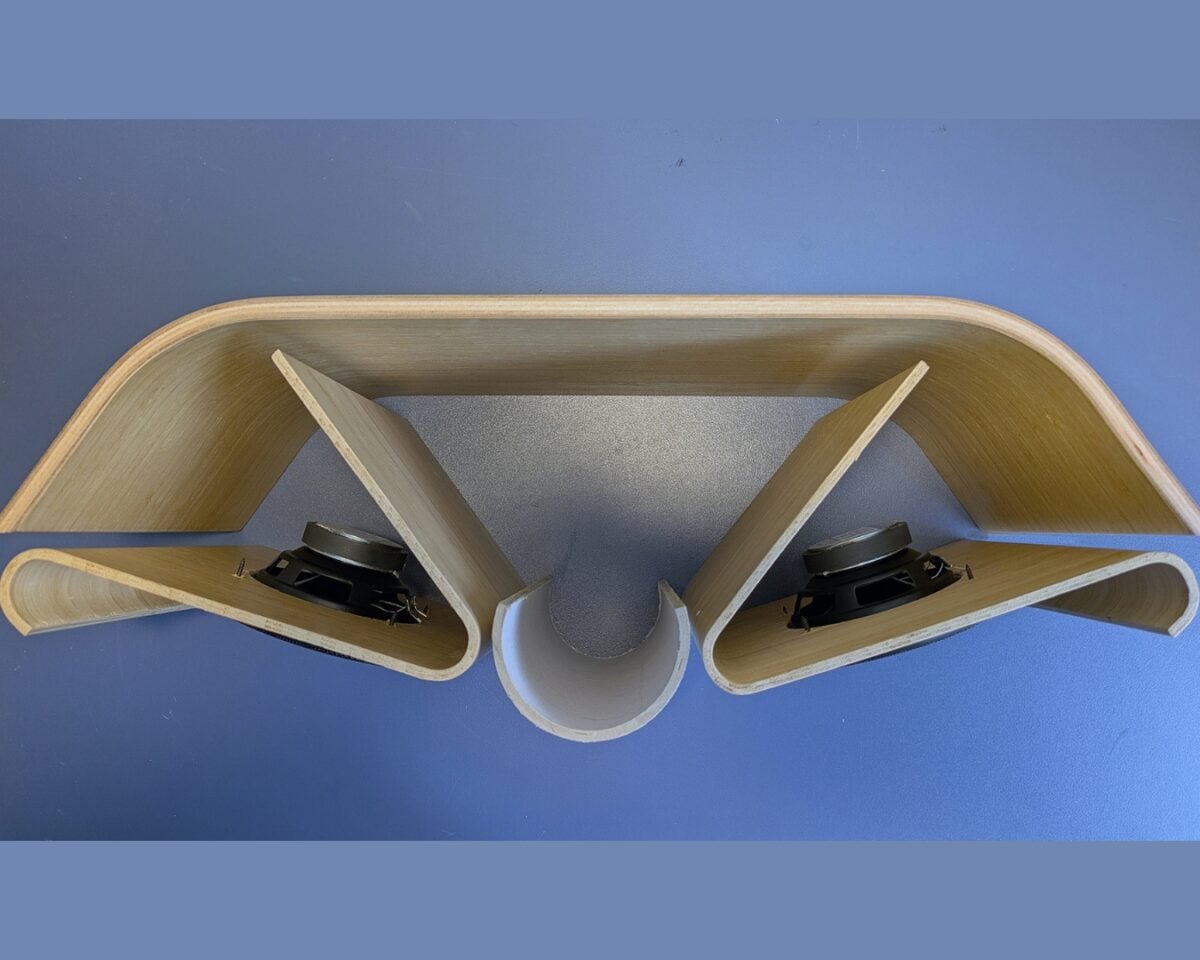
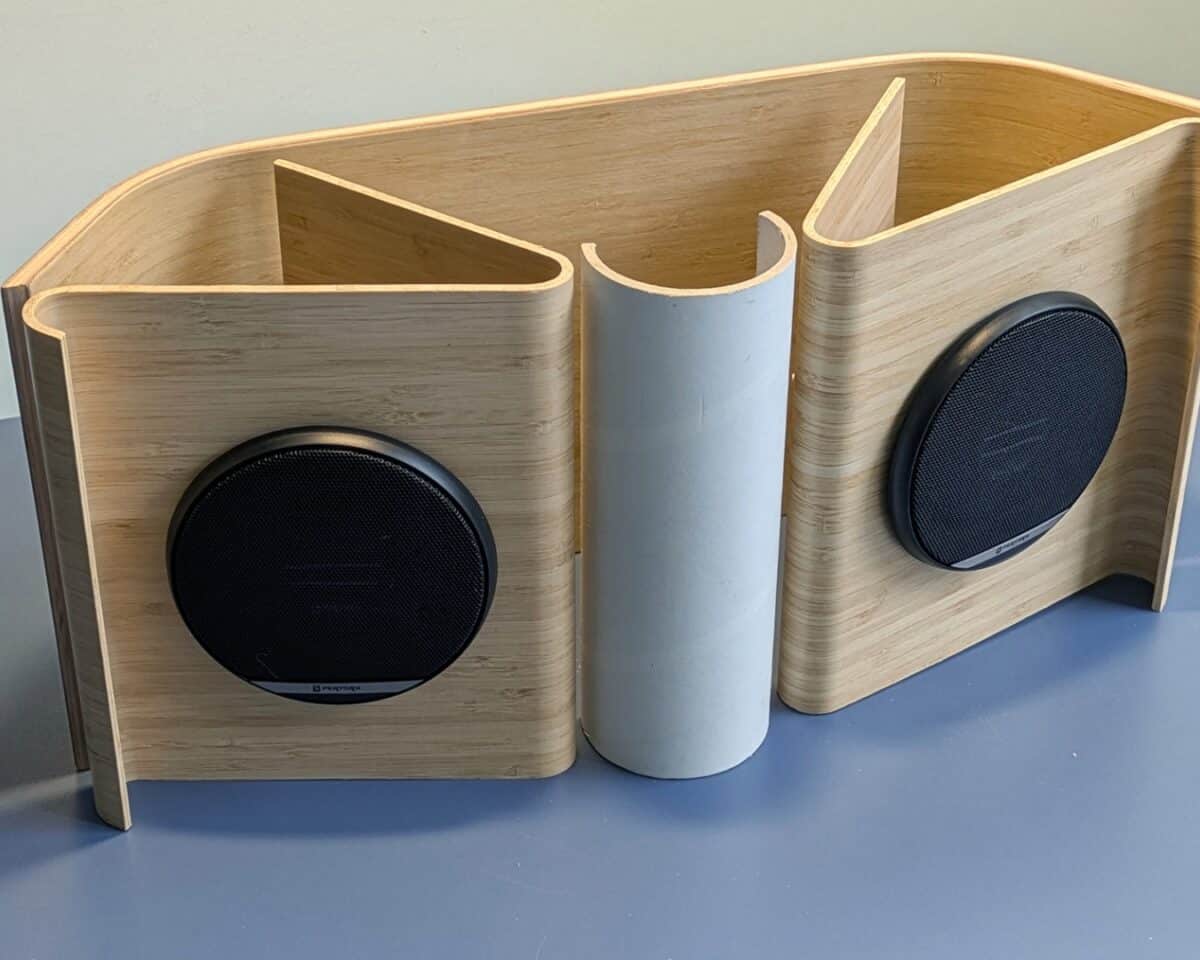
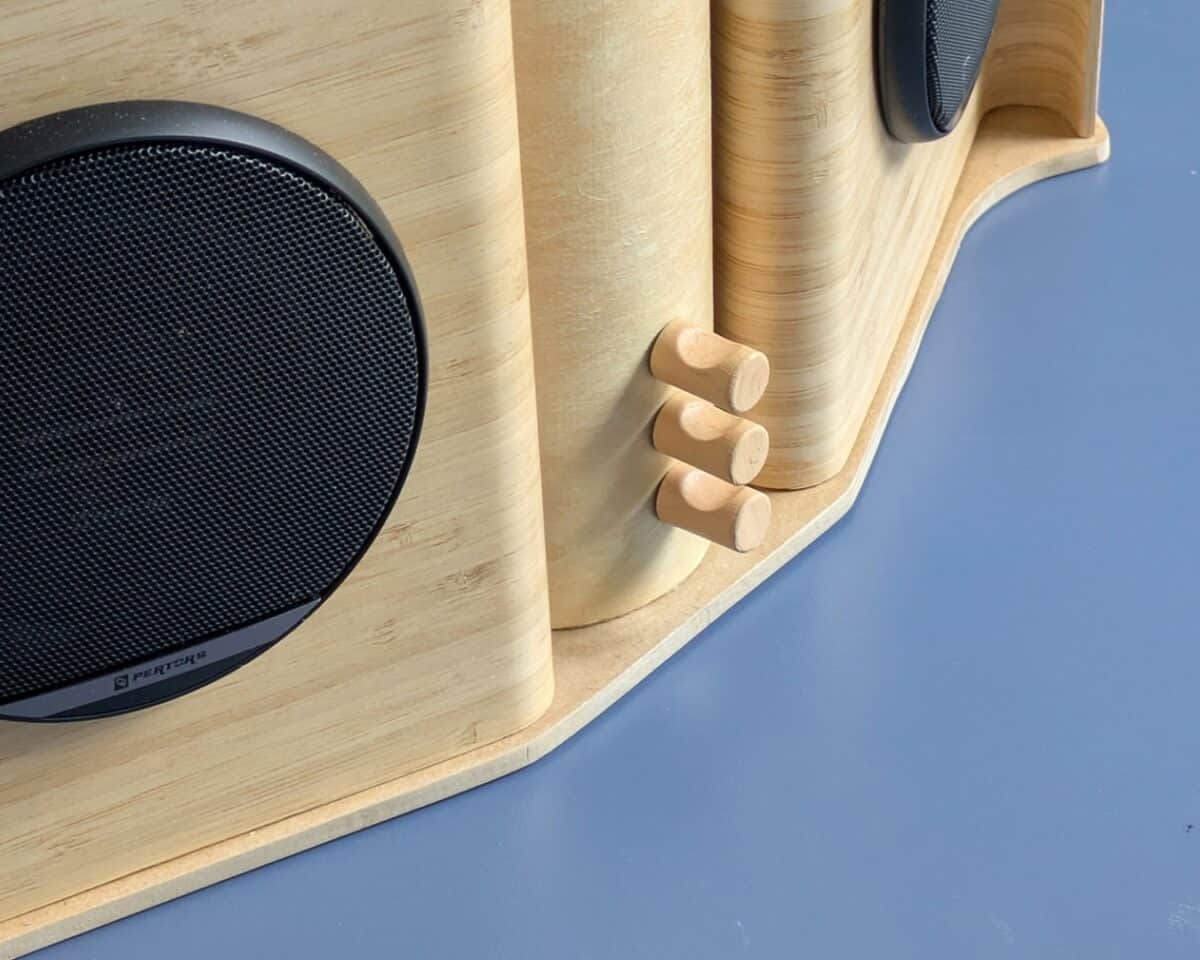
Cut out a section of the cardboard tube to house the amp module. Replace the original knobs on the amp with the BILLY knobs. Paint the tube and BILLY knobs a wood color that matches the SIGFINN and VIVALLA stands.
4. Create the Top and Bottom Panels
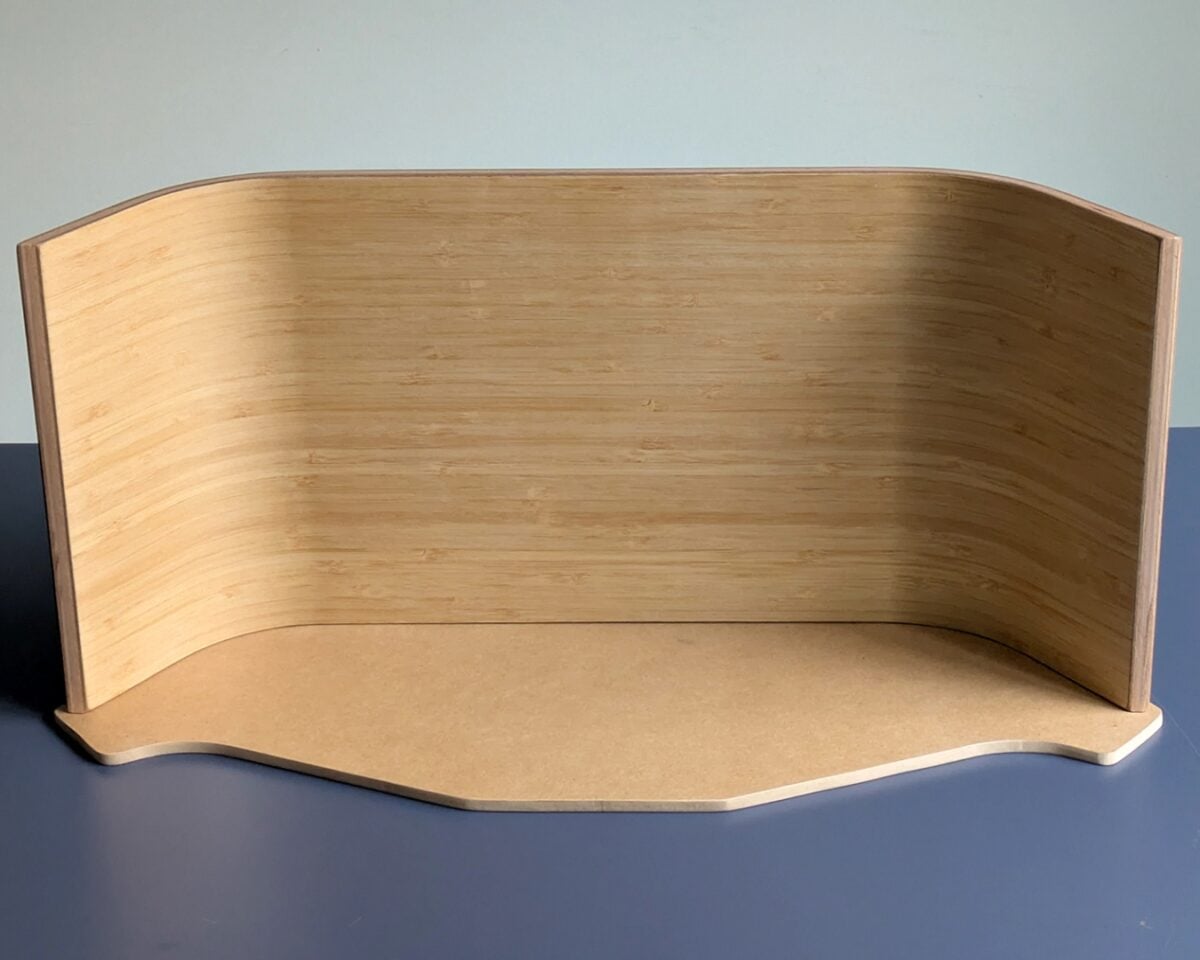
Use the footprint of the IKEA computer stands to cut out the top and bottom panels from the MDF board. Sand the edges and fit the VIVALLA stands snugly between the panels, securing them with wood glue and anchors.
5. Make Connections for Sound
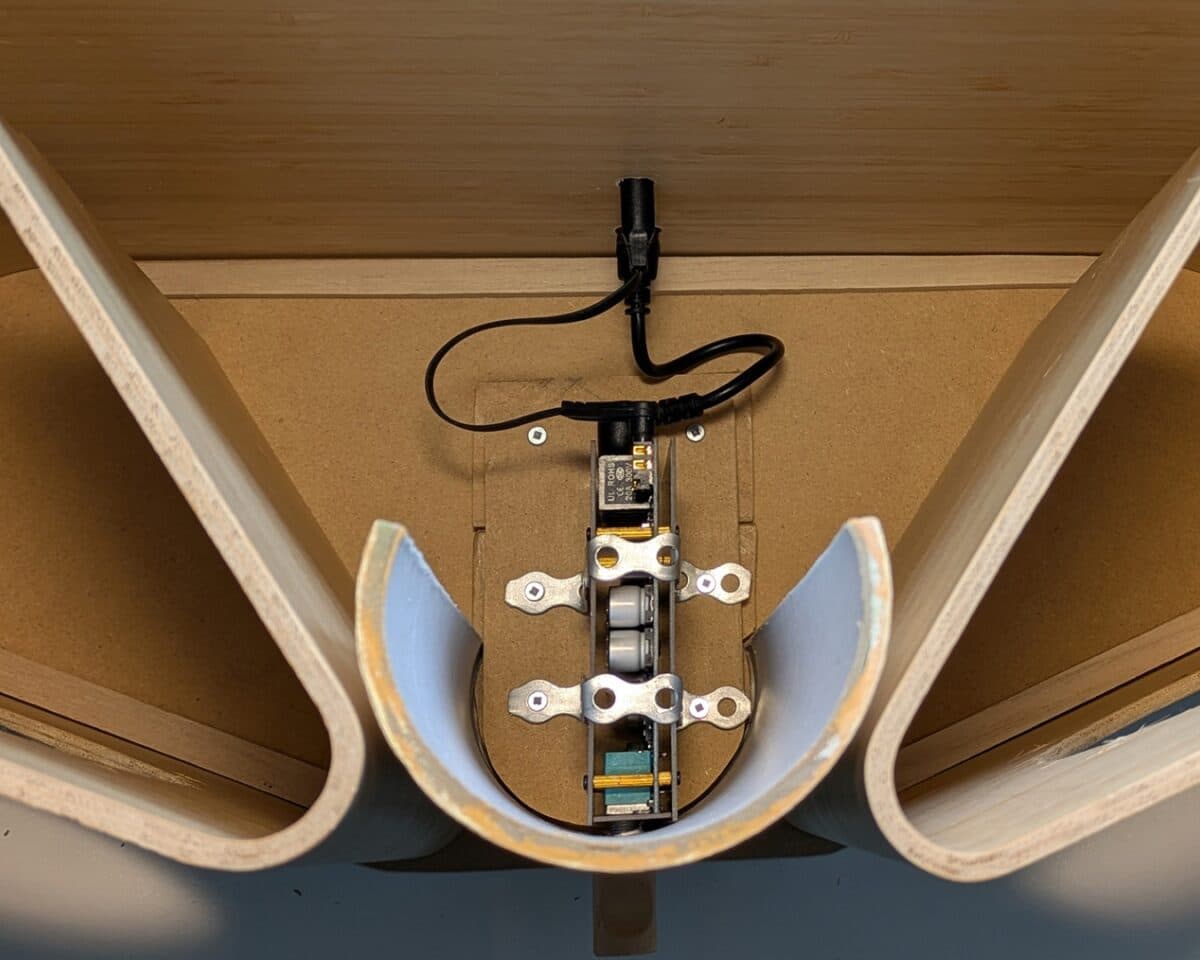
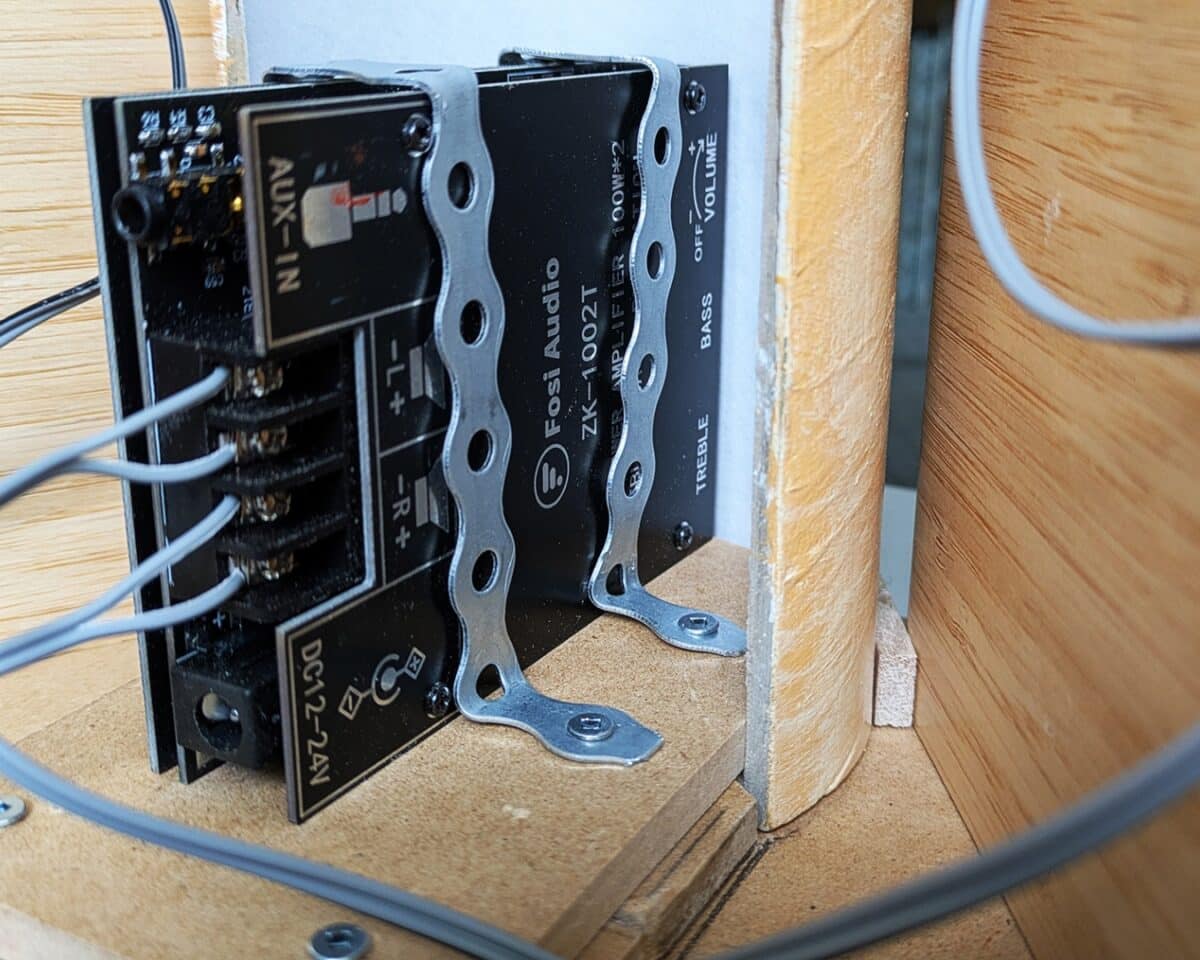
Connect the speakers to the amp. Drill holes in the SIGFINN stand to create sockets for the power and AUX-in inputs.
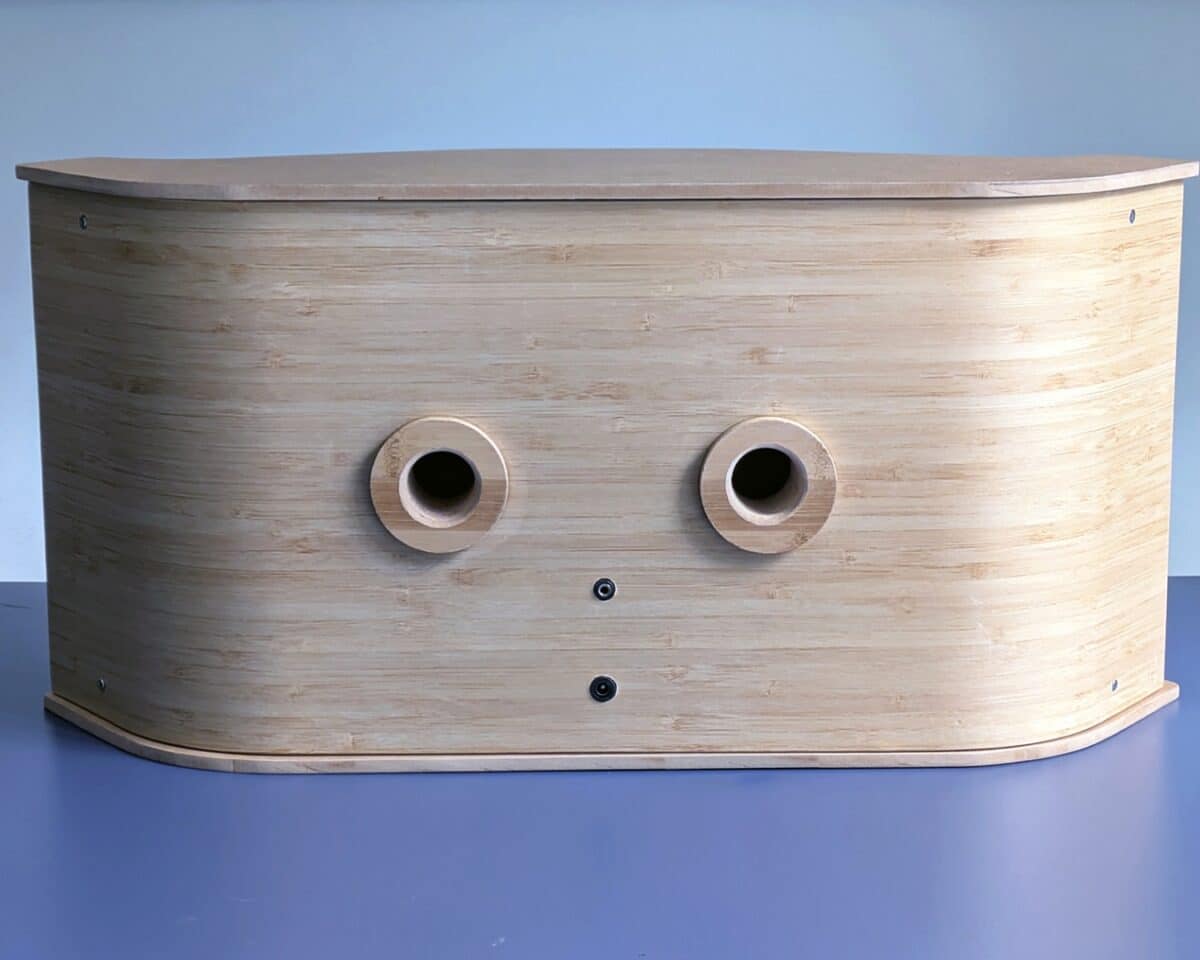
Saw off the bottom of the toothpick holders to turn them into bass reflex tubes. Drill holes in the SIGFINN to mount the tubes, then secure them with wood glue. Connect the DC power and AUX-in cables to the amp.
6. Put It All Together
Attach the SIGFINN panel to your new music system, and tighten the four screws at the corners. You can remove the back panel as needed for future repairs.
Cost of this hack? About $120
The Science Behind the Sound
According to David, many music systems from big manufacturers are becoming so big that you need to tame them with acoustic room treatments. Additionally, there’s more focus on how they look than on functionality, with much of the sound energy directed toward the front, making specific placement important.
Unfortunately, their massive size also makes them virtually immovable, often making it difficult to position them in the ideal place in the room. Therefore, in the case of David’s hack, you could say it proves that size isn’t everything.
David discusses how the curved MDF and bamboo enclosure allows the system to breathe and resonate with the music’s beat.
“I developed my Cremona series based on this theory: You have to let the enclosure breathe and sing,” he explains. “The enclosure is made of thin plywood that acts like the soundboard of a piano. When the speaker interacts freely with the air around them, you can place them anywhere, and they sound just like a musical instrument, not a hi-fi speaker that must be placed at least a certain number of inches or feet from the walls, with whatever minimal degree of toe-in.”
In other words, this hacked speaker isn’t picky about where you put it; it’s going to sound great from anywhere.
What do you think of this hack? Personally, I’ve never thought about hacking speakers, but I would imagine if you’re an audiophile like David, this DIY is music to your ears!